Allegiant Bought Sun Country. Here's What It Means for Your Airport
Allegiant closed its $1.5 billion Sun Country acquisition in May. What the deal says, what it does not promise, and what past mergers did to the airports involved.

Allegiant Air owns Sun Country Airlines. The acquisition closed on May 13, 2026 in a deal reported at roughly $1.5 billion including about $0.4 billion of Sun Country net debt, with ownership split 67/33 between the two shareholder groups. The Allegiant brand survives, the headquarters stays in Las Vegas, and Gregory C. Anderson runs the combined airline.
That makes this the first US budget-airline merger of this cycle to actually close, after Frontier and Spirit’s attempt collapsed in 2022 and a federal judge blocked JetBlue/Spirit in 2024.
Key takeaways
- The deal is closed, not pending. Allegiant paid roughly $1.5 billion, kept its own name and its Las Vegas headquarters, and now runs an airline of nearly 175 cities (the terms).
- Nothing in it protects your airport. Regulators cleared it without conditions, which means no binding service commitments: no guaranteed routes, no guaranteed crew bases, nothing on fares.
- Small spoke airports carry most of the risk. Acquired hubs in past mergers lost a third to three quarters of their departures, and thin spoke cities lost service outright (what history shows).
- Labor sets the timeline. Every workgroup pairing crosses union lines, so seniority lists have to be merged before crews can fly for one airline (why that gates everything).
- The milestone worth watching is the reservation-system cutover, still unannounced. Anderson has guided to a single operating certificate in 18 to 24 months (the clock).
- Do not rush to burn your points. Both loyalty programs stay separate for now and keep their value (what to do).
The terms
Sun Country shareholders received $4.10 in cash plus 0.1557 Allegiant shares per share, an implied $18.89 and a 19.8% premium to the last close before the announcement. They were not conflicted about it: the May 8 vote came in at 43.97 million shares in favor and 32,926 against. Allegiant funded it partly through a $500 million offering of senior secured notes due 2031.
The number management will be judged on is $140 million of annual synergies within three years, which Allegiant credits to network breadth, scale, fleet optimization, and procurement. Early returns are encouraging: on June 30 the company raised second-quarter guidance to at least $1.25 in adjusted earnings per share, up from a guided loss of roughly $0.50 two months earlier.
The DOJ cleared it with no conditions in March and the DOT signed off in April. The two networks hardly touch, with two overlapping routes in winter 2025-26 and one this summer, which left antitrust reviewers very little to object to.
The flip side of a clean approval is that nothing was extracted in exchange for it. There are no binding service commitments anywhere in this deal, just soft language that Minneapolis-Saint Paul is “expected to remain an important operating center.” Nothing in it guarantees a single route, crew base, or fare.
Why Allegiant wanted it
Allegiant flies thin, seasonal, small-city routes and makes much of its money on fees ($76.35 of ancillary revenue per passenger). Out of season, demand for that kind of flying largely disappears.
Sun Country is the hedge. It mixes scheduled flying with charters (casinos, Major League Soccer, collegiate teams, and the Department of Defense) and 20 Boeing 737-800 freighters flown for Amazon under a contract that runs through 2030 with options to 2037. Charter revenue rose 18% in 2025 on a record $1.13 billion of total revenue. That is year-round work that does not care whether it is February.
Allegiant sold Sunseeker Resort to Blackstone for $200 million after spending roughly $700 million to build it, and the related charges drove a $44.7 million GAAP net loss for 2025. Anderson said the sale “supports Allegiant’s strategy centered around the airline” and that the proceeds would repay debt. With the resort gone, the airline has to carry the company.
One more piece landed in July, when the DOT approved transferring Sun Country’s international route authorities to Allegiant, covering Canada, Mexico, Central America, and the Caribbean. That opens the door to Allegiant’s first scheduled international flying.
(Jude Bricker, Sun Country’s CEO through the deal, was Allegiant’s COO from 2006 to 2017 and now sits on Allegiant’s board.)
Two fleets, one open question
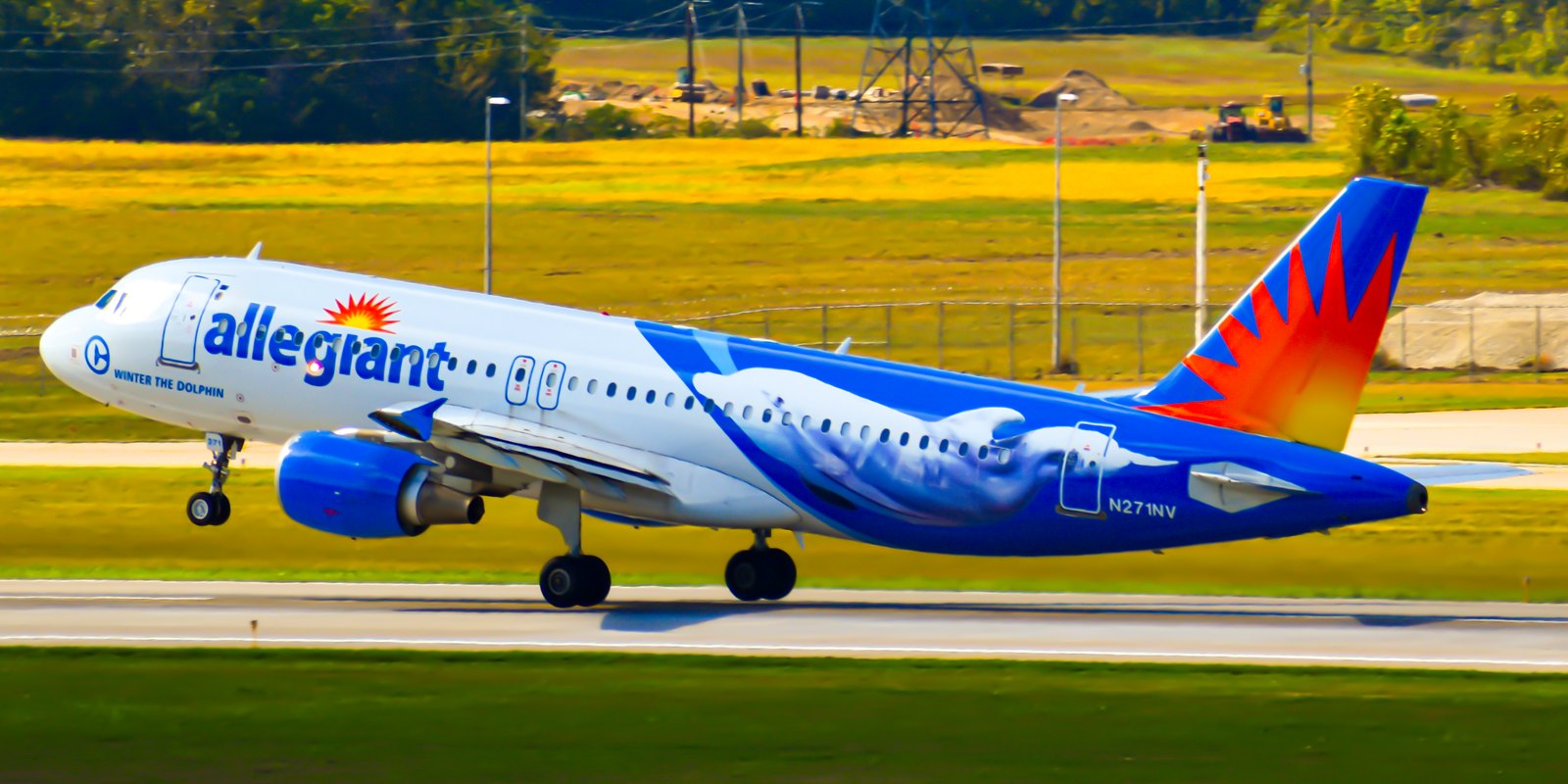
Allegiant puts the combined airline at 195 aircraft, nearly 175 cities, more than 650 routes and about 22 million passengers a year, which Cirium data makes the eighth largest US airline by seat capacity. Allegiant ended 2025 with 123 of those aircraft: 79 A320s and 28 A319s, so Airbus is still most of what you will board today.
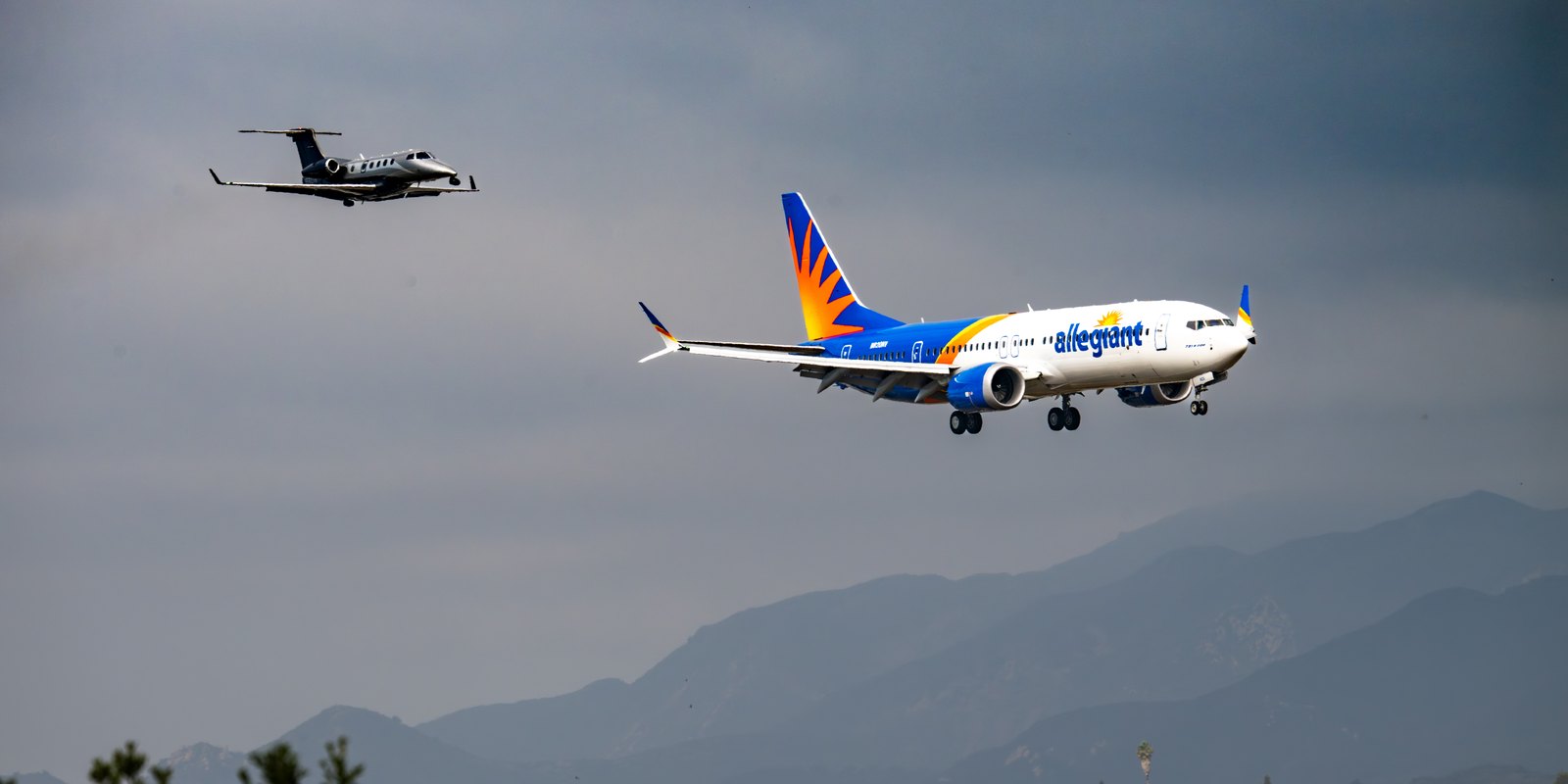
The rest are Boeing 737 MAX 8-200s, and that is the direction. Allegiant was up to 17 by March 2026 and expects 33 more by the end of 2028, mid-transition from an all-Airbus fleet to a Boeing one.
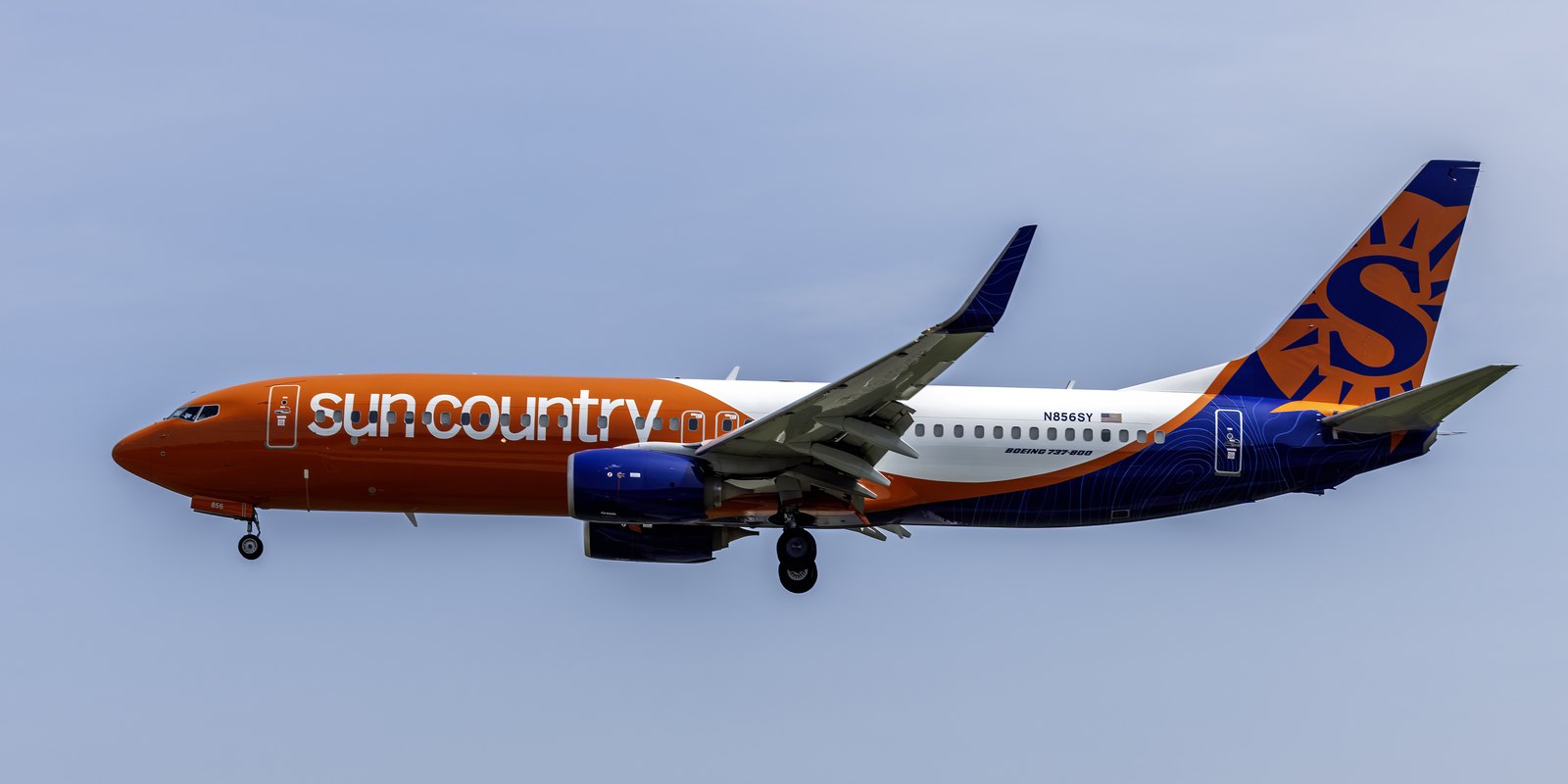
Sun Country is already all Boeing, running 47 passenger 737s plus the 20 freighters with nothing on order. Buying an all-Boeing airline midway through your own Boeing transition (somebody’s fleet planners had a good week) at least simplifies the long-run plan, and Allegiant says it will move MAX jets onto former Sun Country routes as the operations come together.
Aircraft photos: Allegiant A320 by AVA Navigate (CC BY-SA 4.0), Allegiant 737 MAX 8-200 by Glenn Beltz (CC BY 4.0), Sun Country 737-800 by Acroterion (CC BY-SA 4.0), all via Wikimedia Commons.


Labor is what sets the clock
Every major workgroup pairing crosses union lines, so no group can simply be folded into the other’s contract. This is the underrated part of the deal.
| Workgroup | Allegiant | Sun Country |
|---|---|---|
| Pilots | Teamsters | ALPA |
| Flight attendants | TWU | Teamsters |
| Mechanics | Teamsters | AMFA |
Every contract stayed in place at close, and both carriers keep operating under separate agreements until seniority lists are integrated and joint contracts signed. Allegiant said in July it is negotiating single labor agreements with the workgroups, and no seniority integration has been announced. Crews cannot be freely mixed across two certificates and two contracts, which is why integration runs in years rather than months.
What history does to the acquired airline’s airports
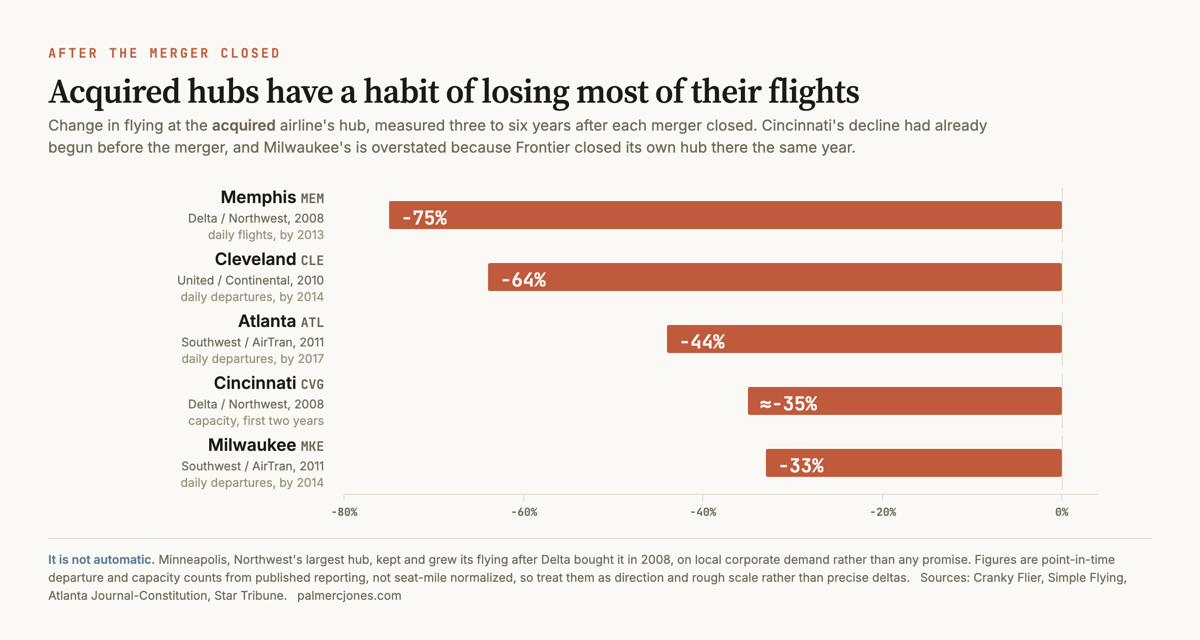
Each of these airports was the acquired airline’s hub, and each shed a third to three quarters of its departures within six years. Memphis fell 75%, Cleveland fell 64%, and AirTran’s Atlanta and Milwaukee operations dropped 44% and 33% under Southwest. Caveats matter: Milwaukee is confounded (Frontier closed its own hub simultaneously), Cincinnati’s slide started pre-merger, and these are daily departure counts, not seat-mile normalized.
Decline is not automatic. When Delta bought Northwest in 2008 it inherited Minneapolis (which shows up in this story twice, once as Delta’s 2008 inheritance and separately as Sun Country’s home base today), and MSP grew instead, reaching 433 daily departures by 2015. MSP held up because Twin Cities corporate demand and low operating costs made the flying worth keeping, and not because Delta promised anything.
Today Sun Country is roughly a tenth of MSP’s capacity, the airport’s largest non-Delta operator, while Delta is still the reason MSP is a major airport. Allegiant’s president calls MSP its largest base “by any metric”. Big airports with deep local demand are not usually where these mergers show up.
The small spokes are where the risk sits, and Southwest/AirTran is the precedent. Southwest kept the big AirTran cities and dropped 14 to 15 small ones with no replacement: Sarasota, Knoxville, Lexington, Moline. Fares at Moline rose 31% after AirTran left.
Aviation Week’s route analysis puts Sun Country at about 4.2 weekly flights per MSP route against Allegiant’s 2.7 weekly systemwide. That gap is the mechanism: a Sun Country route is likelier to thin out and go seasonal than to disappear outright, which leaves less rebooking slack when a flight breaks.
Sun Country has already cut about 348 September departures across 34 routes, suspending Cancún, San Juan, Asheville, and Raleigh-Durham, with Anderson blaming crew attrition and increased cargo flying. He called the cuts temporary, and October through April is largely unchanged. I fly out of RDU, which is how this landed on my radar, and the honest read is that a thin seasonal route was the easiest thing to cut when crews got tight.
Separately, Allegiant is closing its Bellingham and Savannah crew bases in November: the flights continue, but the based crew jobs go away.
The integration clock
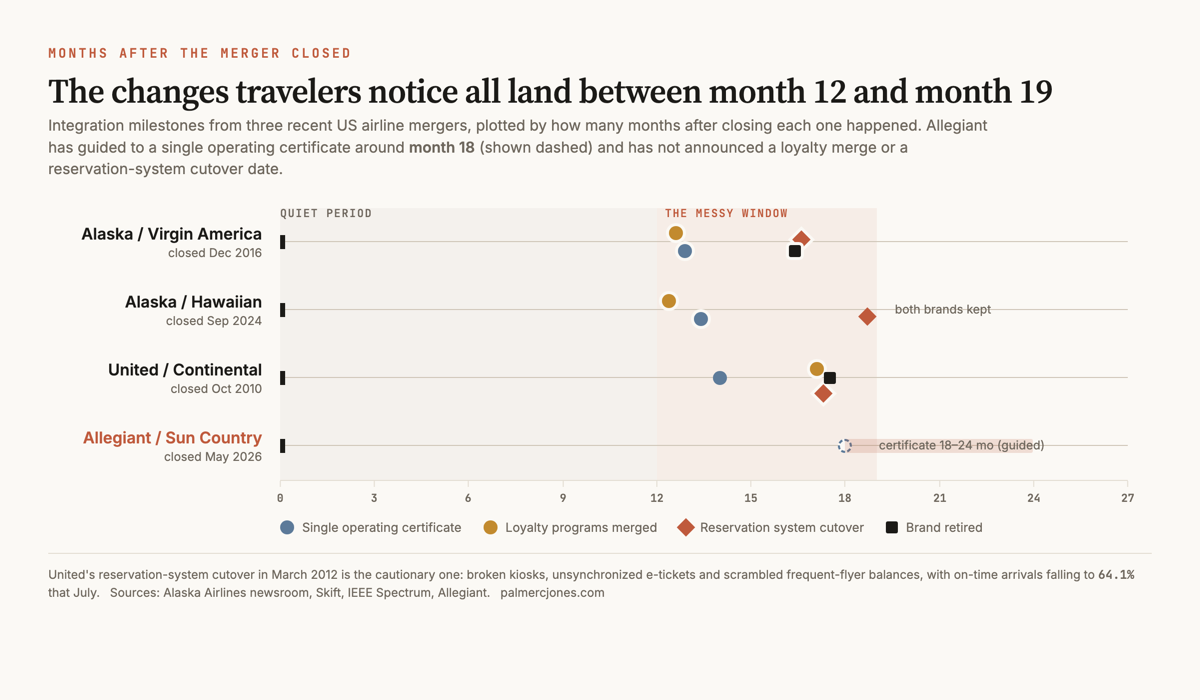
Single operating certificates took about 13 months at Alaska/Virgin America, 13 at Alaska/Hawaiian, and 14 at United/Continental, whose certificate came through on November 30, 2011. Anderson has guided to 18 to 24 months here, and an Allegiant executive says the Sun Country livery will be gone by early 2028.
The date to watch is the reservation-system cutover, still unannounced. United’s March 2012 Continental cutover produced months of kiosk failures, broken e-tickets, and scrambled loyalty balances, and on-time arrivals fell to 64.1% by July 2012. American avoided a repeat in 2015 by draining flights out of the old system gradually instead of flipping a switch.
Fares after past mergers
Delta/Northwest showed about +11% short-run on overlapping routes by one method and roughly nothing by others; at United/Continental hub overlaps, legacy carriers raised fares while low-cost carriers cut them; and a 2026 GAO report found short-run increases on some routes. The research disagrees with itself.
What matters more is how many carriers are left. GAO found destinations served by a single carrier priced 25% above average and those with four or more carriers 52% below. Because these networks barely overlapped, very few travelers lose a competitor on their own route, so the fare risk sits where Sun Country was the only discount option.
So what should you do
Allways Rewards and Sun Country Rewards stay separate for now and points keep their value, so there is no reason to rush and burn them. The eventual merge requires renegotiating two cobranded card deals (Bank of America for Allegiant, Synchrony for Sun Country), which is usually where quiet devaluations hide. Both websites already sell each other’s flights, but book and manage with whichever airline issued your ticket until the systems merge.
Watch for the reservation-system cutover date and avoid tight connections right after it. And if a Sun Country route matters to you, track its weekly frequency rather than whether it still exists, because thin routes get thinner well before they get cancelled.
The question I keep coming back to is whether an airline with an appetite for small cities and newly transferred international authorities eventually points at city pairs nobody flies today, like the RDU to XNA nonstop I have been arguing for. Anderson has nearly 175 cities and no obligation to keep a single one of them. What are you watching at your airport?
Frequently asked questions
Is Sun Country going away? The brand is. An Allegiant executive says the Sun Country livery will be gone by early 2028, and everything will fly as Allegiant. Whether specific flights survive is a separate question, and most of the network is unchanged so far.
What happens to my Sun Country Rewards points? Nothing right now. Allways Rewards and Sun Country Rewards stay separate for now and points keep their value. The eventual merge requires renegotiating two cobranded card deals, and that is the moment to watch for a quiet devaluation.
Will my airport lose flights? It depends on how much of your airport either airline represents. Large airports with deep local demand came through past mergers intact, while thin spoke cities are the ones that historically lost service: Southwest dropped 14 to 15 small AirTran cities with no replacement. Track your route’s weekly frequency, because thin routes get thinner before they get cancelled.
Why did Sun Country cancel my September flight? Sun Country cut about 348 September departures across 34 routes, suspending Cancún, San Juan, Asheville, and Raleigh-Durham. Anderson blamed crew attrition and increased cargo flying rather than the merger itself, and called the cuts temporary. October through April is largely unchanged.
Will fares go up? Probably not on most routes, because the two networks barely overlapped and very few travelers lose a competitor on the route they fly. The exception is any market where Sun Country was the only discount option. GAO found destinations served by a single carrier priced 25% above average.
Is it safe to book either airline right now? Yes, with one caveat. The two still run separate reservation systems, so book and manage with whichever airline issued your ticket. Once a cutover date is announced, avoid tight connections in the weeks right after it, since United’s 2012 cutover caused months of problems.
When will they become a single airline? Anderson has guided to a single operating certificate in 18 to 24 months from the May 2026 close. Recent mergers reached that milestone in about 13 months, so the guidance is on the slower end.
Sources
- Allegiant: completion of the Sun Country acquisition
- Allegiant and Sun Country: deal announcement and terms
- Allegiant: board composition after the acquisition
- Allegiant 8-K: notes offering and pro forma financials
- Allegiant 8-K: raised Q2 2026 guidance
- Sun Country 8-K: shareholder vote results
- ch-aviation: DOJ clears Allegiant/Sun Country
- AirlineGeeks: final regulatory approval
- AirlineGeeks: DOT approves transfer of Sun Country’s route authorities
- Aviation Week: almost no network overlap
- Aviation Week: what impact will the merger really have (route frequencies)
- Simple Flying: Allegiant and the MSP hub playbook
- DOJ: district court blocks JetBlue/Spirit
- Allegiant Travel Company: Q4 and full year 2025 results
- Sun Country Airlines: Q4 and full year 2025 results
- Sun Country: revised Amazon air transport agreement
- Blackstone Real Estate to acquire Sunseeker Resort for $200 million
- Business Observer: Sunseeker construction costs
- The Points Guy: Allegiant’s post-merger strategy
- Simple Flying: eighth largest US airline
- Simple Flying: single operating certificate timing
- AirlineGeeks: Sun Country brand to be phased out
- AirlineGeeks: crew attrition forces Sun Country schedule cuts
- AirlineGeeks: Allegiant to close crew bases
- Star Tribune: Allegiant cuts hundreds of Sun Country flights at MSP in September
- Teamsters: monitoring the proposed merger
- ALPA: Sun Country pilot group
- TWU: Allegiant flight attendants ratify contract
- AMFA: reviewing the merger’s impact on front-line professionals
- Simple Flying: what happened to Delta’s Memphis hub
- Cranky Flier: United cuts its Cleveland hub
- AJC: Southwest in Atlanta, fewer flights and a local focus
- Doctor Aviation: the fall and rise of Cincinnati/Northern Kentucky
- Star Tribune: Northwest and Delta, 10 years on at MSP
- AviationPros: Southwest/AirTran merger stops flights to cities
- Alaska Airlines: Virgin America single operating certificate
- Alaska Airlines: Hawaiian single operating certificate
- PR Newswire: FAA issues single operating certificate to United and Continental
- IEEE Spectrum: United’s reservation system cutover
- Cranky Flier: American and US Airways migrated differently, and it paid off
- Review of Industrial Organization: Delta/Northwest fare effects
- Journal of Air Transport Management: United/Continental fare effects
- GAO (2026): airline competition report
- GAO: airfares and the number of competing carriers