
The Barcode That Brews Your Coffee
Working in supply chain, I probably think about barcodes more than the average person. So when I spotted something unusual on a Nespresso pod during a recent trip to New York, I had to stop and take a closer look. Around the rim of the foil lid was a tight ring of alternating black and white bars (clearly a barcode, but not one I recognized). Turns out, it’s doing something completely different from any barcode I’d seen in a warehouse.
The Vertuo System
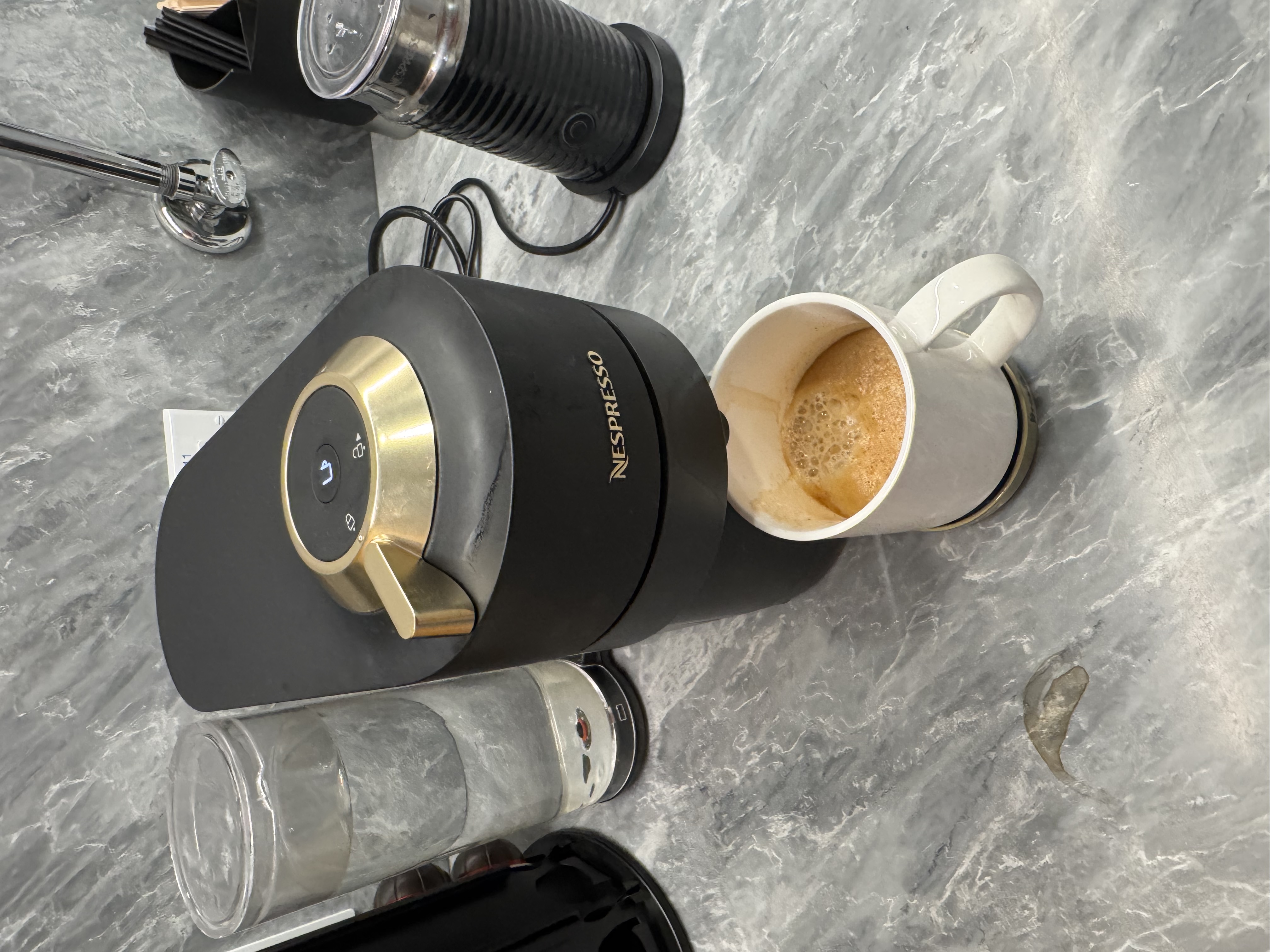
The pod I was looking at belongs to Nespresso’s Vertuo line (affiliate link), which launched in North America in February 2014. The Vertuo system uses a proprietary brewing method called Centrifusion™ (the machine spins the capsule at up to 7,000 RPM while simultaneously injecting water). The centrifugal force pushes water through the grounds evenly in all directions, which is how the machine achieves that crema-covered result without the 9+ bars of pump pressure found in traditional espresso machines.
The spinning pod is cool enough on its own. But the barcode is what makes the whole system work.
What the Barcode Actually Encodes
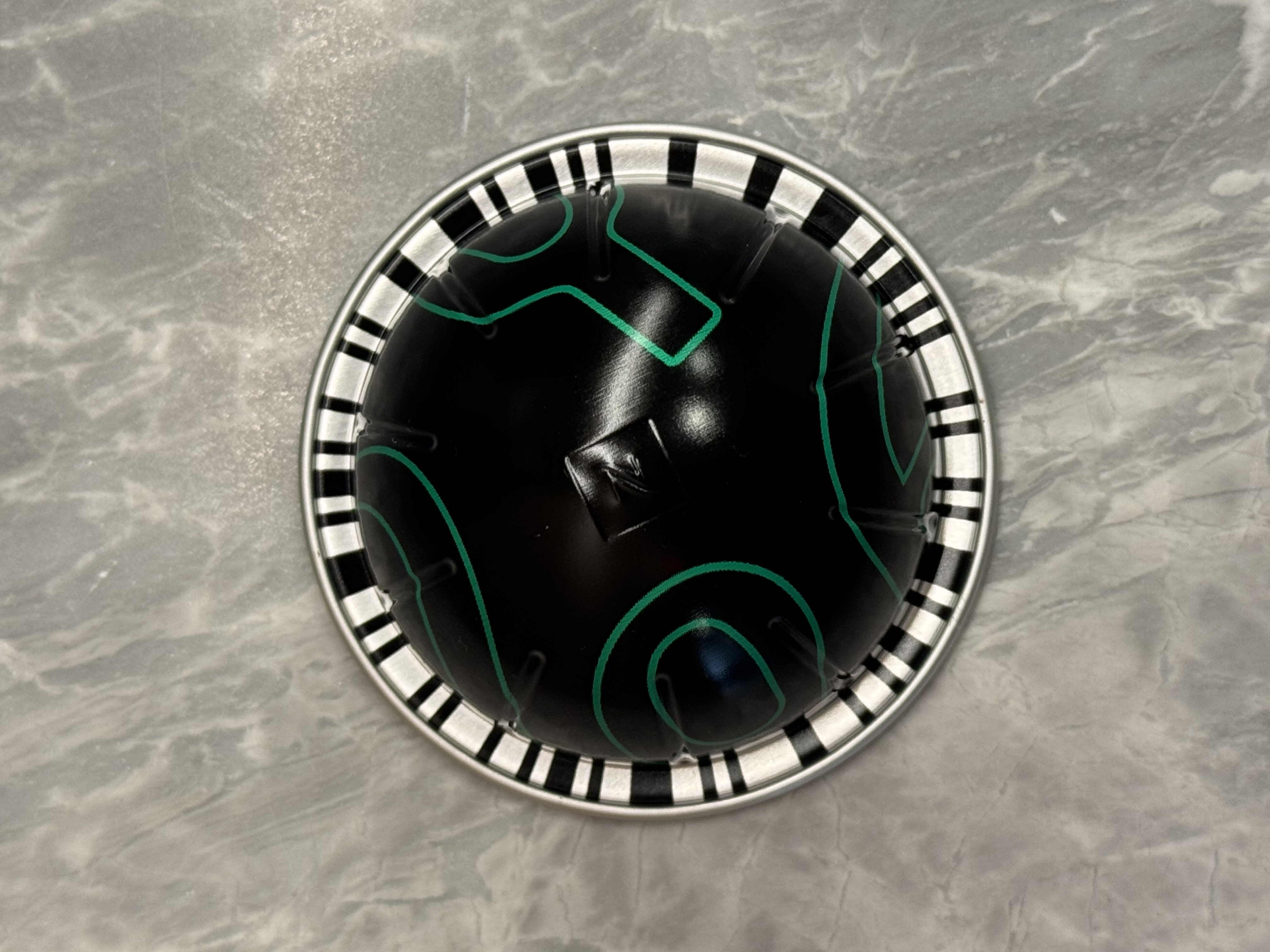
That circular ring of bars isn’t just a product ID. It’s a brewing recipe. When you insert a Vertuo pod and press the single button on the machine, an optical sensor reads the barcode and automatically configures five distinct parameters:
- Rotational speed (RPM)
- Water temperature
- Water volume
- Infusion time
- Flow rate
The barcode is also printed five times around the rim (redundancy to ensure the machine can read it no matter which direction the pod is dropped in).
This is fundamentally different from what I work with in supply chain. A GS1-128 barcode on a pallet or case tells you what the product is, when it was made, how much it weighs. It’s an identity document. The Nespresso barcode is an instruction set. It doesn’t tell you about the pod. It tells the machine how to use it.
Why It Matters for the User
The practical impact is simple: you can’t mess it up. Drop in an espresso pod, and the machine automatically runs a 40ml shot at the right temperature and spin speed for that specific blend. Drop in a coffee pod, and it reconfigures entirely (more water, different rotation, longer infusion). There’s no size selector, no strength dial, no guesswork.
Compare this to Nespresso’s Original line, where the user chooses from three fixed shot sizes by holding a button. The machine has no idea what blend you’re using. It just runs water for however long you tell it to. That puts consistency in the hands of the person making the coffee, not the manufacturer who designed the blend.
Vertuo flips that relationship. The pod knows best.
The Pattern Across Products
Nespresso isn’t the only one doing this. Keurig 2.0 machines used an RFID chip in K-Cup pods to configure brew settings (and famously, to block unlicensed pods, a decision that did not go over well). Inkjet printer cartridges have used barcode and chip systems for years to communicate ink type and volume preferences back to the printer.
Embed the usage instructions in the consumable. Let the product configure the tool, rather than asking the user to do it manually. It reduces error and keeps the manufacturer in control of the experience.
It also creates a moat. Nespresso holds several patents on the Vertuo barcode system, and those patents were tested in court (a German company called K-fee sued Nestlé in 2021 over barcode-related IP before the two parties eventually settled). That legal fight is a sign of just how much value Nespresso sees in this approach.
The Supply Chain Angle
In distribution, we use barcodes to track movement. In manufacturing, we’re increasingly using embedded identifiers to track process parameters (temperature logs, inspection results, quality checks). The idea of encoding how to handle a product directly onto the product itself isn’t new in industrial settings. Nespresso just made it elegant and invisible to the consumer.
Next time you make a Vertuo coffee and think nothing of just pressing one button, remember there’s a small circle of binary data doing a lot of quiet work on that foil lid.
Comments