Local Fortress or National Brand: The Two Ways Programs Build a Roster
Notre Dame's recruiting map looks like a flight schedule. Arcs run from South Florida to Southern California , coast to coast, all ending in South Bend. Pull up TCU…
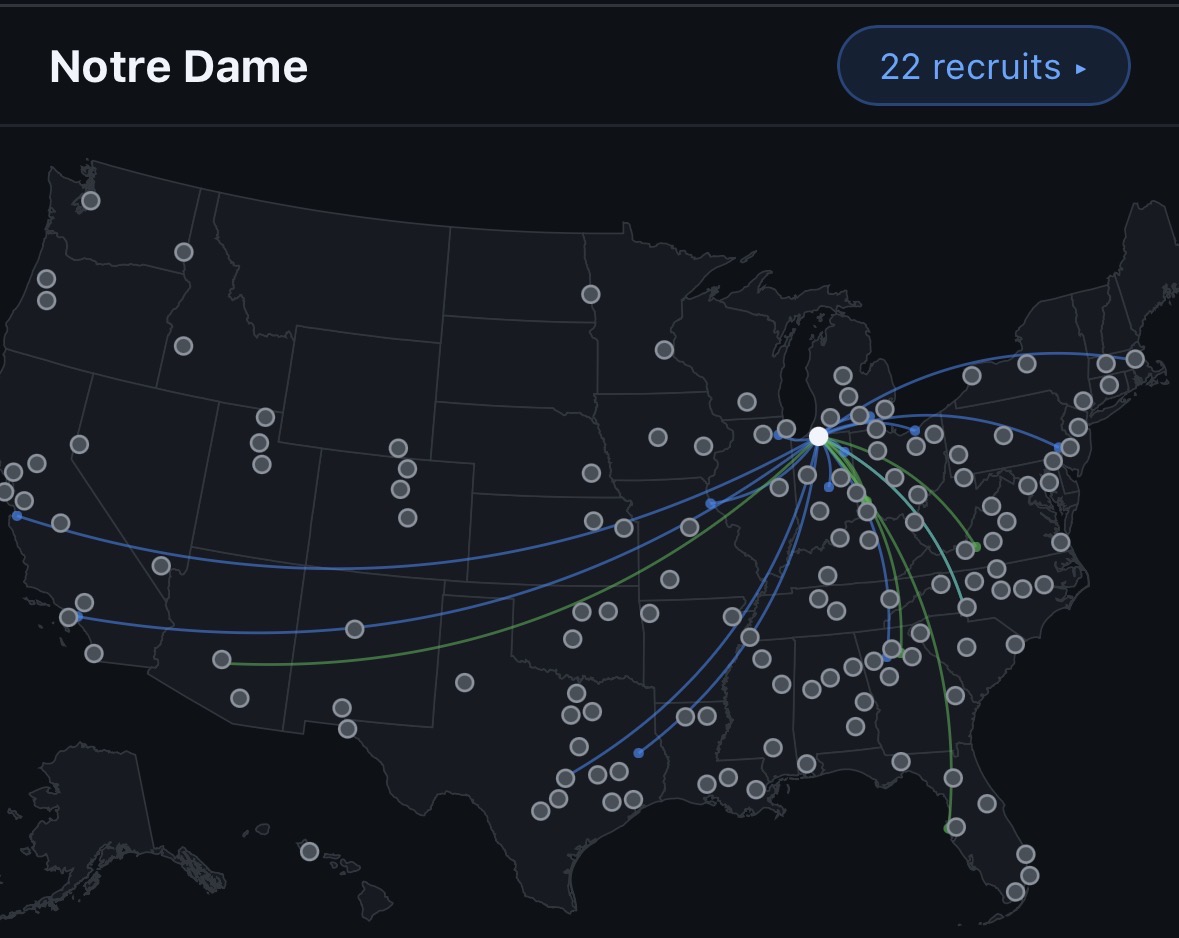
Notre Dame’s recruiting map looks like a flight schedule. Arcs run from South Florida to Southern California, coast to coast, all ending in South Bend. Pull up TCU in the CFB Recruiting Origins Map and the picture flips — almost every line stays in Texas.
Same sport. Same transfer portal era. Completely different footprints.
Notre Dame 2024 — 22 recruits, coast to coast
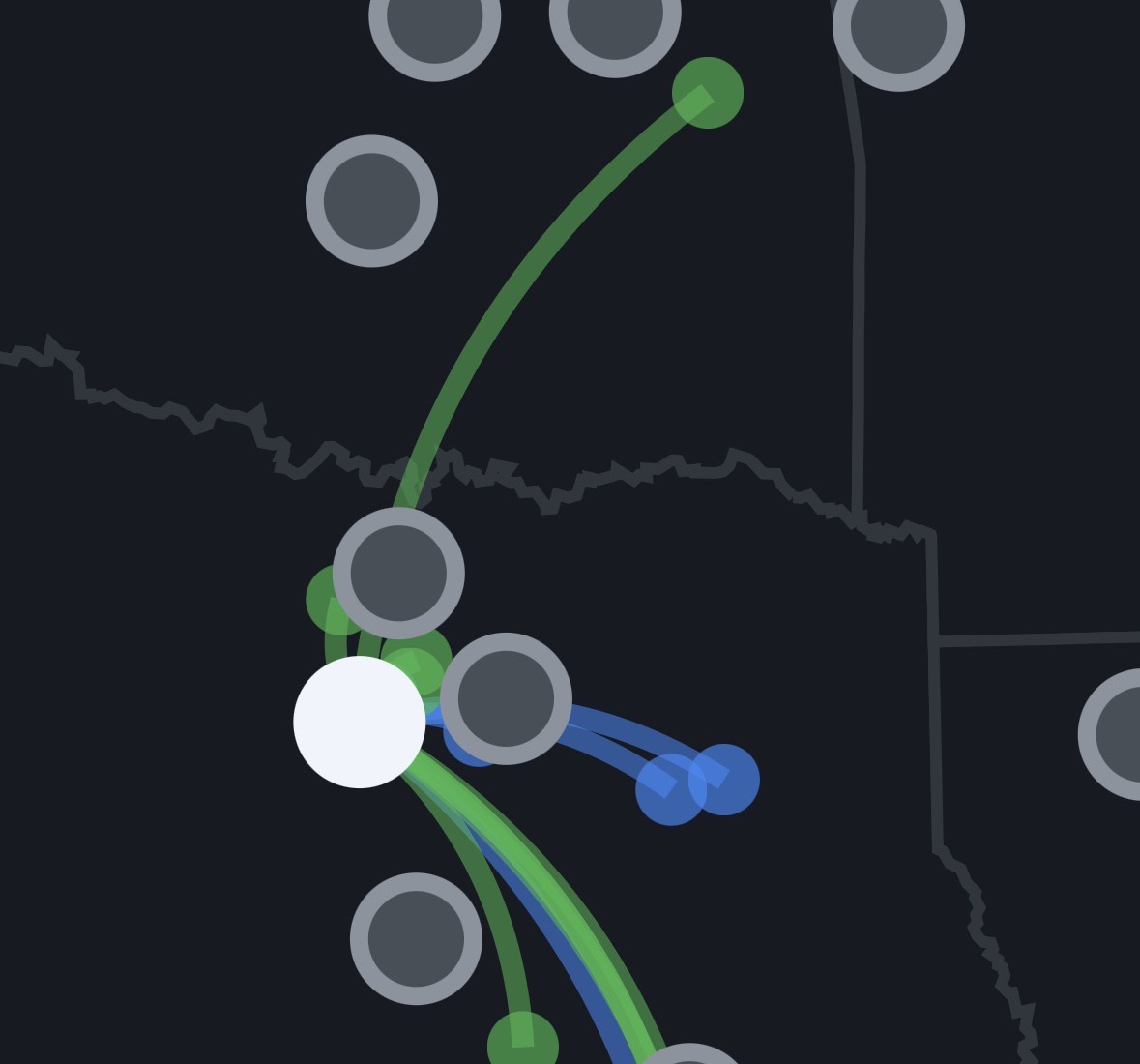 TCU 2024 — 16 recruits, almost entirely in Texas
Four States Run the Country
Talent supply is not spread evenly, and where your program sits relative to it shapes almost everything about how you recruit.
Four states produced the bulk of FBS recruits from 2015 to 2024: Texas (3,348), Florida (2,853), Georgia (2,071), and California (2,034) (College Football Data API). A program in one of those states can fill a 25-man class without leaving home.
Oregon can’t do that. The Pacific Northwest is not a talent hub, and the numbers show it: 91% of Oregon’s 2020–2024 recruits came from out of state. Those long arcs fanning east from Eugene aren’t a brand statement. There just aren’t enough players nearby.
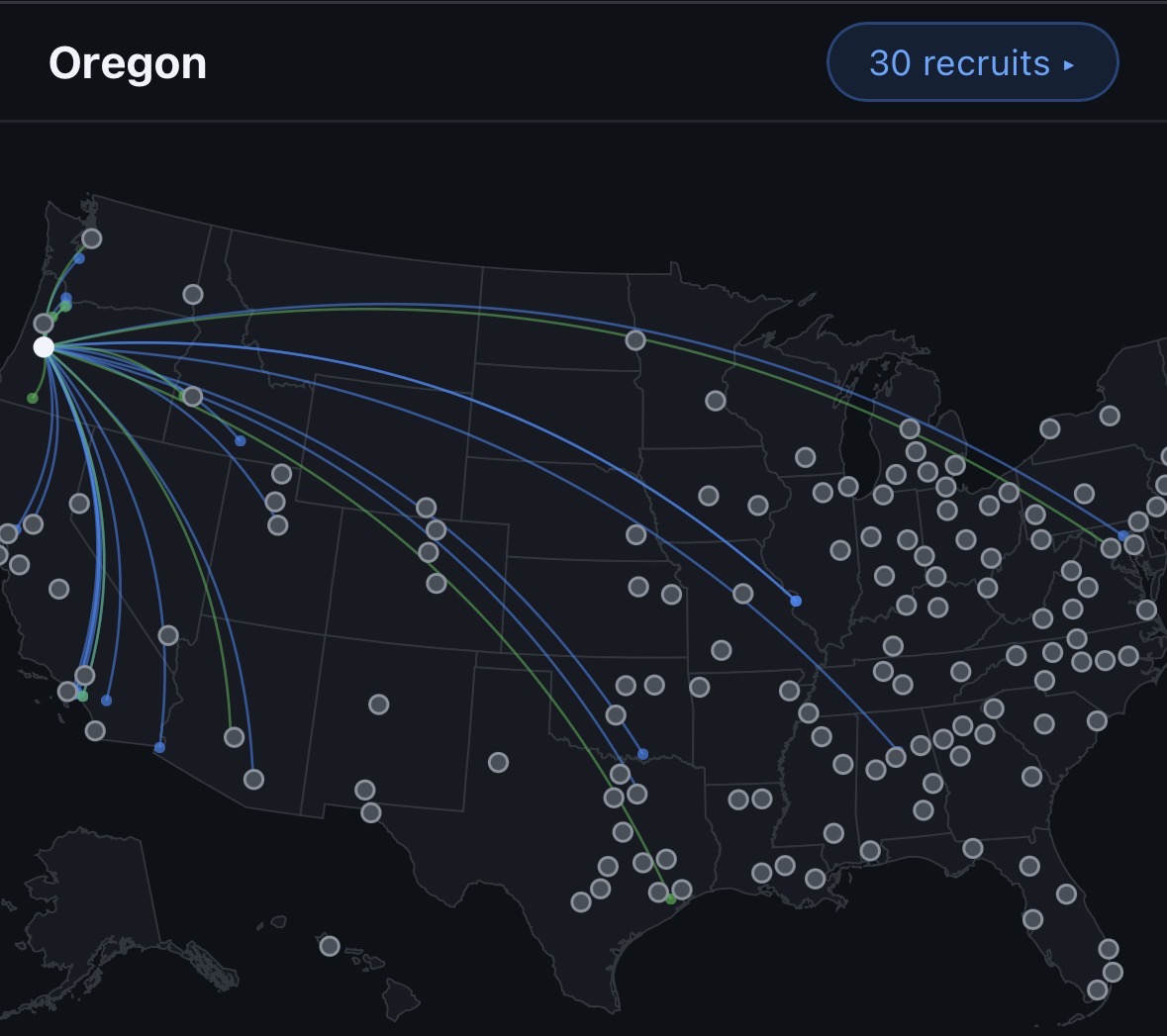 Oregon 2024 — 30 recruits, nearly all from out of state
When It’s a Choice
Notre Dame is the interesting case. Indiana produces college-caliber players, but only 7% of Notre Dame’s recent classes came from in-state. The Irish could lean local. They don’t, because they don’t have to. Clemson is similar at 12% in-state — South Carolina is not a top-five talent state, but Clemson hasn’t operated like a regional program in years.
TCU runs the opposite play. 76% of its recruits come from inside Texas, which says as much about how well they’ve worked that state as anything else. When elite players grow up an hour away, you don’t need coast-to-coast arcs.
This matters more now that conference realignment has reshuffled the map. Oregon joining the Big Ten and USC heading east are programs that already had national footprints before the moves. They weren’t regional teams being asked to scale up. The recruiting data was already there.
Why I Built This
I’ve been following conference realignment closely and kept coming back to the same question: are these programs actually national brands, or regional programs being asked to play a bigger stage? A map felt like the most honest way to answer it. You can talk about brand all you want. The recruiting lines don’t lie.
This is the first in a series of interactive CFB tools, built on data from the College Football Data API and geocoded with the simplemaps US Cities Database. Pull up your school and see where it falls.
Recommended Reading
- Enrollment vs Endowment: Big Ten and SEC
- Purdue Tops the Charts in In-State Minutes for 2024–25 Season
- CFB National Championship Coach Trends
- SMU Travel Map 2024: Carolina to California